HOTLINE: 0908 340 239
Cho Lach Travel Guide: The Year-Round Orchard Paradise Where You'll Forget the Way Home
The sensation of plucking ripe, juicy rambutans directly from the branch or inhaling the rich, aromatic scent of durian right in the orchard always holds a special charm for experiential travelers. To fully immerse yourself in this authentic river region atmosphere, Cho Lach is the ideal destination. Located in a fertile borderland, Cho Lach boasts lush fruit orchards all year round, ready to captivate anyone passionate about exploring natural cuisine.
Let's explore the highlights that make this land an unmissable destination for orchard eco-tourism.
Nestled between two major rivers, the Tien and Co Chien rivers, Cho Lach is blessed by nature with a fertile islet terrain, constantly enriched by year-round alluvial soil. This geographic advantage makes it one of the largest cradles for fruit trees in the Southern region (Nam Bo).
Geographical Location and Getting There
Cho Lach is a district located to the west of Ben Tre Province, directly bordering Vinh Long Province via waterways. The distance from Ben Tre city center is about 40km, and it is approximately 140km from Ho Chi Minh City. The route is highly accessible, making it suitable for both motorcycles and cars for a day trip or a weekend getaway.
Why is it dubbed the "Capital of Saplings"?
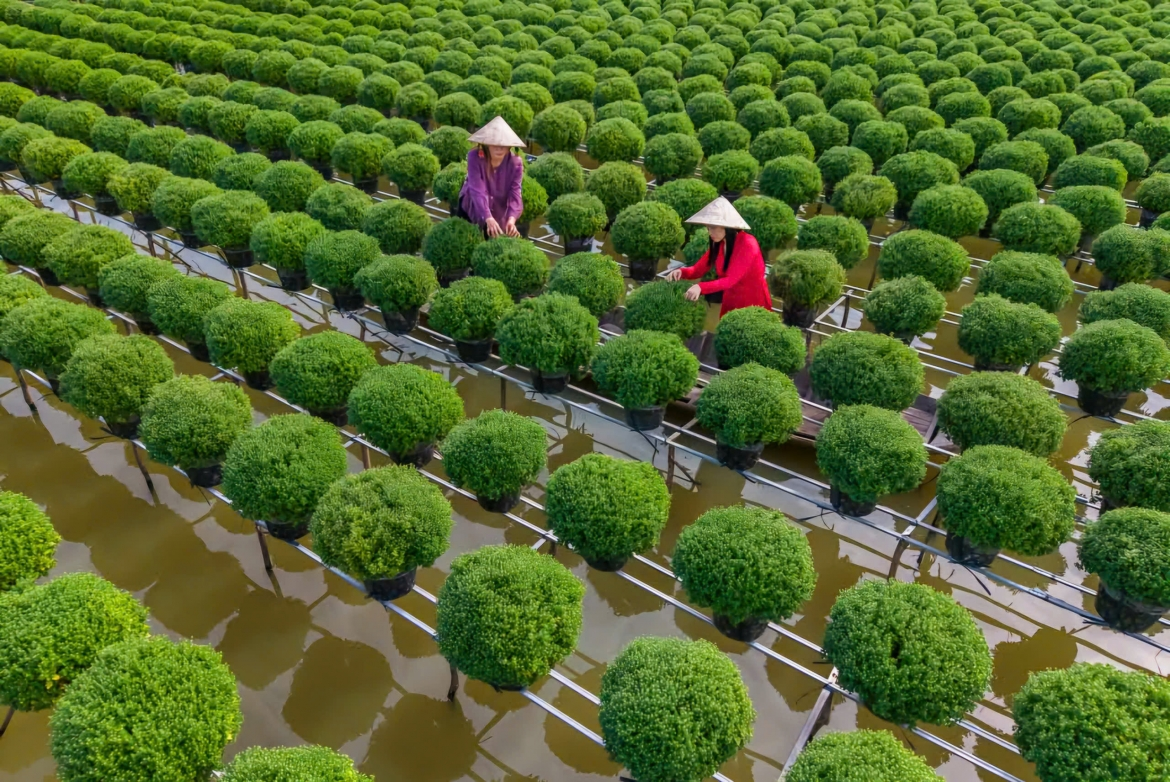
Not only famous for its sweet fruits, Cho Lach is also the largest production hub for plant saplings and ornamental plants in the country. Thanks to the masterful grafting and air-layering techniques of local artisans, millions of high-quality saplings are distributed from here to all regions, making a significant contribution to Vietnamese agriculture.

Unlike regions that only harvest in a single season, Cho Lach offers sweet fruits across all four seasons. During each period of the year, this land puts on a new coat woven from different specialty fruits.
The Legendary Cai Mon Durian Paradise
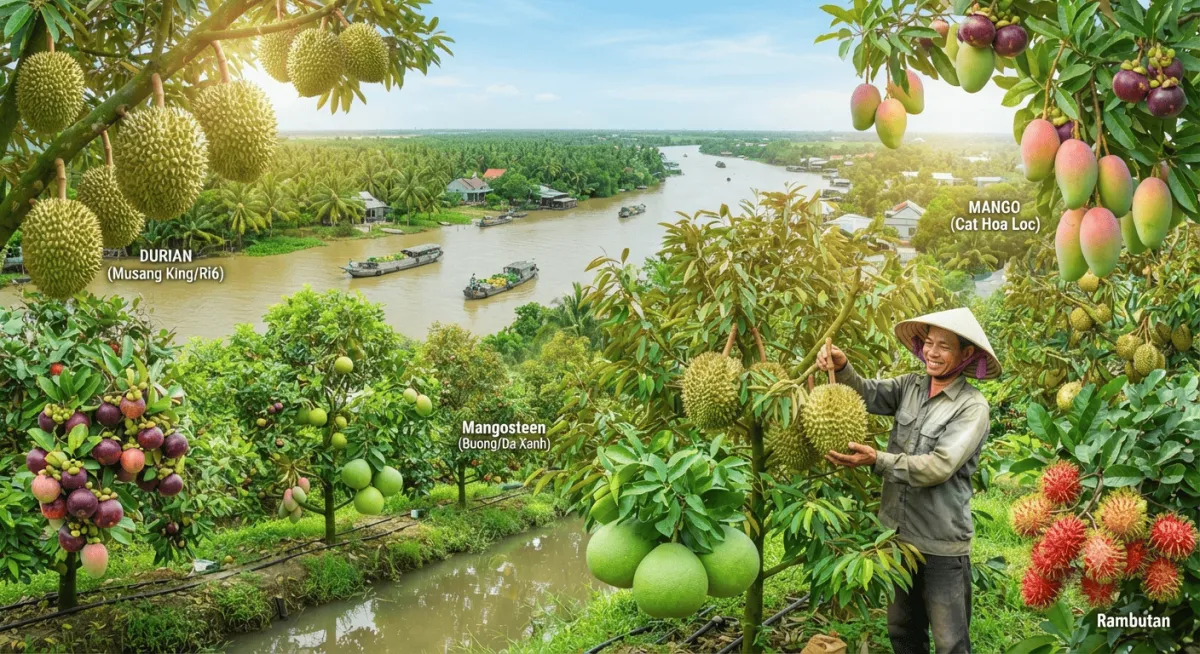
Durian is always at the top of the must-try list when visiting this land. The unique soil characteristics from the Tien River create premium quality durians.
Characteristics of Monthong / Ri6 Durian (Yellow Flesh, Shrunken Seeds): Durians here are famous for their vibrant yellow, buttery, and smooth flesh with an intensely rich flavor and a very high rate of shrunken seeds. Enjoying a tree-ripened durian offers a distinctively superior taste compared to fruits harvested early and artificially ripened.
The Experience of Enjoying Tree-Dropped Durians: Many orchard owners in Cho Lach still welcome visitors for early morning strolls to find durians that have just dropped naturally. These fruits reach the perfect stage of ripeness, bursting with fragrance and ultimate freshness.
Rambutans Painting the Sky Red
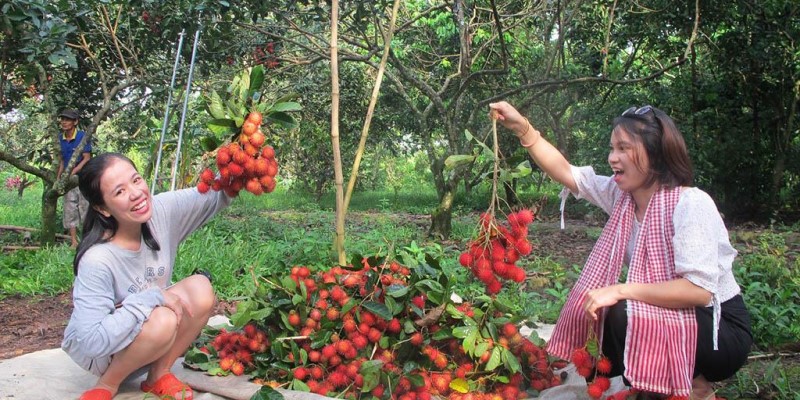
From May to July, the islets of Cho Lach enter the rambutan harvest season, creating a vibrant landscape that attracts flocks of tourists.
Crunchy and Sweet "Nhan" Rambutans: Although small, the "Nhan" rambutan has a thin skin, short hair, and flesh that easily separates from the seed. The flesh is crunchy and refreshingly sweet, offering an instant taste of fresh fruit straight from the branch.
Java Rambutans and Premium Varieties: Besides the "Nhan" variety, Java and Rongrieng rambutans are also widely cultivated here. Large size, juicy flesh, and a deeply sweet taste are the selling points that keep these varieties in high demand.
Mangosteen – The Cooling Fruit of the Alluvial Soil
After indulging in rich durian segments, mangosteen serves as the perfect palate cleanser. Cho Lach mangosteens feature a dark purple, medium-thick rind enclosing snow-white segments with a harmonious, naturally refreshing sweet-and-sour flavor.
An Abundance of Other Specialty Fruits
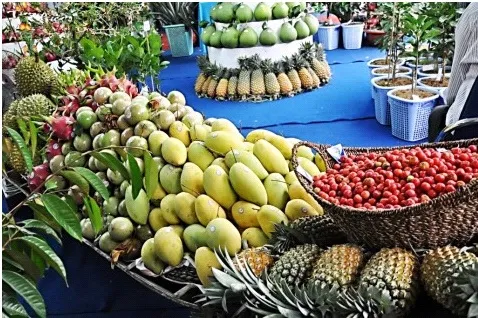
The fruit diversity doesn't stop there. Visitors also have the chance to savor juicy pink-fleshed green-skin pomelos (bưởi da xanh), yellow-fleshed longans (nhãn xuồng), Hoa Loc mangoes, or clusters of langsat (bòn bon) and Burmese grapes (dâu xanh) weighing down the branches throughout the year.
Coming to Cho Lach means entering a rustic, peaceful countryside lifestyle. The experiential activities here are highly practical, helping visitors better understand the agricultural life of the river region.
Hand-Pick and Eat Fresh Fruits on Site: The "all-you-can-eat" orchard tour format is highly popular. After purchasing an entrance ticket, visitors can roam freely under the shady canopy, pick the ripest fruits, and enjoy them on the spot.
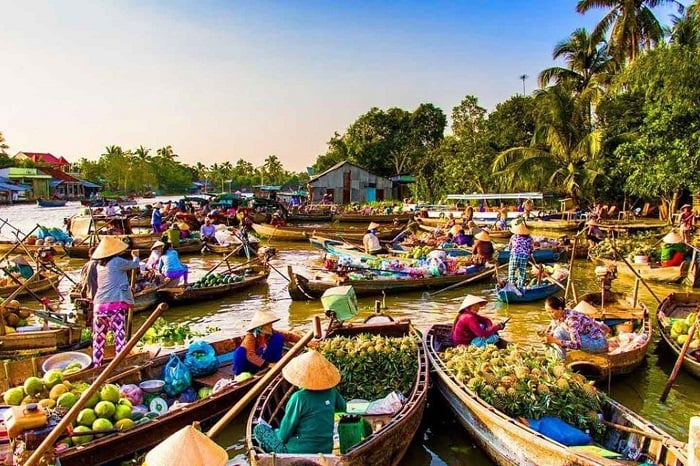
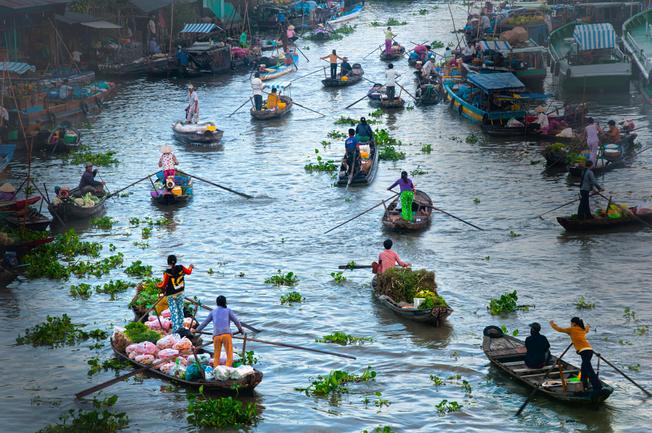
Rowing a Three-Plank Boat (Xuồng Ba Lá) Along Orchard Canals: The canal system interwoven throughout the gardens serves both irrigation and transportation. Sitting on a xuồng ba lá, gently rowing through fruit-laden branches hanging close to the water surface, is a deeply relaxing experience.
Visiting the Cai Mon Flower and Sapling Village: After enjoying the fruits, the itinerary usually continues with a visit to the ornamental flower gardens. Here, visitors can witness the process of shaping unique ornamental plants into animal or classic bonsai shapes by skilled artisans.
Beyond the fruits, the local cuisine—made from fresh, homegrown ingredients—is another highlight that keeps tourists staying longer.
Free-Range Chicken Salad with Mangosteen or Langsat: Firm, naturally sweet shredded free-range chicken is mixed with sliced mature green mangosteens or langsat fruits. The slight tartness and astringency of the fruits blend perfectly with sweet-and-sour fish sauce, creating a unique dish that stimulates the taste buds.
Phu Da Islet Rice Snail and Clam Pancakes (Bánh Xèo): Rice snails from Phu Da Islet are famous for being fat, sweet, and grit-free. Locals usually boil them with lemongrass to dip in ginger fish sauce, or use the snail meat combined with river clams as fillings for crispy, rich, coconut-flavored bánh xèo.
To ensure a smooth trip, keep these essential tips regarding timing and preparation in mind:
Best Time to Visit: Although fruits are available year-round, the ideal time to witness the hustle and bustle and the widest variety of fruits is from May to August. This is also when regional fruit festivals and competitions take place.
Orchard Etiquette: Respect the orchard rules. Avoid breaking branches or picking young fruits recklessly, which causes waste and financial damage to the farmers.
Appropriate Attire: Choose neat, comfortable clothing and wear sneakers or flat anti-slip sandals, as orchard paths are mostly dirt roads. Bringing insect repellent is highly recommended.
Buying Souvenirs: Fruits purchased directly at the orchard always offer the best prices and maximum freshness. You can ask the owner to pack them in styrofoam boxes for easy long-distance transport.
 Cho Lach encapsulates the full beauty of a Southern Vietnamese orchard region: prosperous, rustic, and rich in natural produce. A trip here not only relieves mental stress through its lush green spaces but also delivers an authentic culinary experience. If you are looking for a true eco-tourism destination, Cho Lach is undoubtedly a top choice.