HOTLINE: 0908 340 239
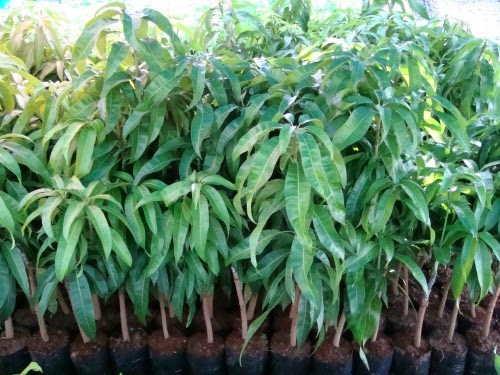
A fruit that already has a sweet and fragrant taste even when eaten green, the Thai mango is not only favored by consumers looking to buy it for consumption, but orchard farmers are also eager to grow it due to its high yield advantages.
The Thai mango is a prized mango variety imported from Thailand. Since its introduction to Vietnam, it has shown great adaptability to our local environment, yielding very high fruit quality and productivity.
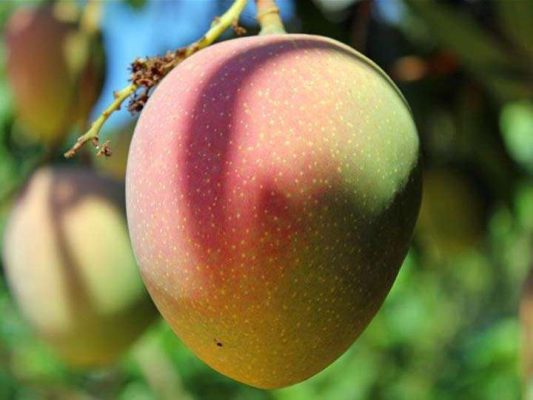
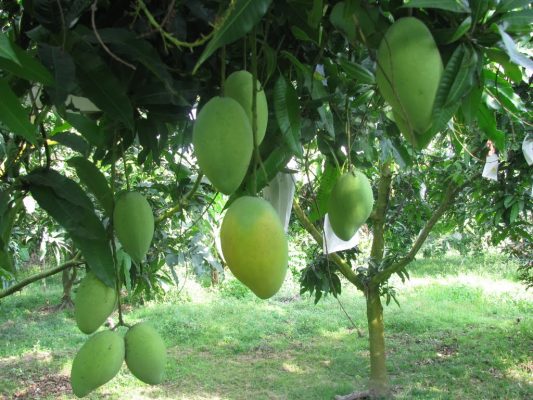
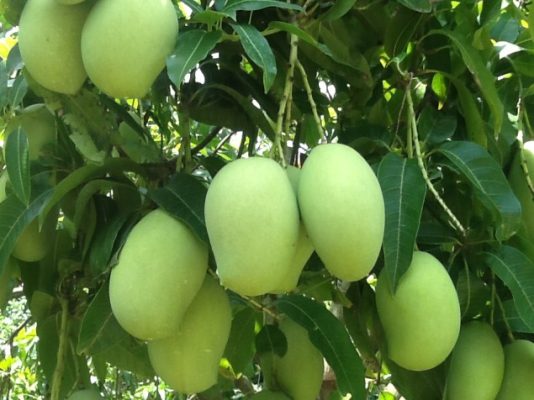
This is a woody tree with an average height of about 6 meters. The tree features a well-developed fibrous root system and a wide canopy of branches. The prominent feature that sets this mango variety apart from others is its superior fruit quality. Thai mango fruits are elongated, rounded, and slightly curved at the tail. The thick skin is dark green, and you can already taste its sweetness even when eating it green.
The average weight of a Thai mango ranges from 300 to 400 grams per fruit. The tree has a very high fruit-setting rate, with a single tree producing up to 70 kg of fruit per year.
Thai mangoes are not picky about soil and are suitable for cultivation in various conditions. The trees are hardy and have few pests and diseases.
The growth period and harvest time are shorter than those of domestic mango varieties, taking only 2 years from planting to harvest.
The fruit-setting rate is higher than that of other mango varieties, resulting in higher and more stable yields year after year without alternate bearing.
The trees can be managed for off-season fruiting, allowing for better selling prices and a year-round source of income.
Due to these many advantages, the Thai mango variety is increasingly cultivated and brings high economic efficiency to orchards. On the market, this fruit—which can be eaten both green and ripe while remaining delicious—is favored by consumers for fresh consumption or processing into juices, jams, smoothies, etc.
The nutritional value of Thai mangoes is also quite high, especially abundant in Vitamins A, C, and D, along with various minerals and antioxidants. Thai mangoes are extremely beneficial for health, particularly for the elderly and young children.
Thai mango trees are currently grown primarily through grafting or layering. With rootstocks consisting of native mangoes grafted with Thai mangoes, the saplings retain the traits of the parent tree and exhibit excellent growth and development. You need to select healthy, large, and plump saplings, avoiding stunted or diseased plants.
The planting season for Thai mangoes is divided into two periods: around February to March and August to September each year. The climate during these times is favorable for mango growth without requiring excessive maintenance labor. The soil for planting mangoes can be sandy soil or loam with high nutrient ratios. If planting in low-lying areas, you need to build raised beds at least 60 cm high. A pH level of about 5.5 to 7.2 meets the requirements.
Mango trees have an average height of about 5 meters and a fairly wide canopy, so it is best to plant each tree about 4 meters apart or more. If planting on a large scale, the density ranges from 500 to 950 trees per hectare.
Before planting, dig planting holes and carefully treat the soil. The holes should have a minimum size of 60x60x60 cm, and you need to apply a basal fertilizer to each hole consisting of 15 to 20 kg of decomposed farmyard manure, 1 kg of Super Phosphate fertilizer, and 1 kg of powdered lime. Mix the fertilizers thoroughly, refill the hole, and wait 1 month before planting the saplings.
When planting, remove the plastic nursery bag from the root ball and gently place the sapling in the center of the hole. Fill in with soil and pack it tightly around the base so the tree stands upright. You can insert a stake to keep the tree stable when newly planted. After 1 month of planting, once the tree has stabilized, you can remove the stake.
To ensure the best growth for the trees, it is essential to manage water, fertilization, and pest/disease control effectively.
The irrigation water source must be clean and unpolluted. Water periodically once every 3 days depending on soil moisture. Additionally, during the rainy season, you must prevent waterlogging in the soil below.
This is an indispensable step in growing and caring for mangoes. Fertilization should be divided into two different stages, with specific amounts applied during each stage:
In the young stage: Apply 200–400g of NPK 16:16:8 fertilizer plus about 150g of Urea per root.
In the mature stage: Gradually increase the fertilizer amount to 2–5 kg per tree of NPK 16-16-8 and 3–4 kg of KOMIX fertilizer. When fertilizing, divide the amount evenly into two applications at the beginning and end of the harvest season.
The care period for Thai mangoes that requires the most attention is the flowering and fruiting stage, as this is when numerous pests and diseases attack the tree. Mango flowers do not bloom uniformly, which can cause diseases to affect fruit quality. You should use cultivation practices and technical treatments to induce uniform blooming, which minimizes pests and diseases and ensures the best fruit quality.
How to induce uniform flowering: Process young mango trees to produce two flushes of new shoots ("cơi đọt"). After the flushes turn to a light-green rice-leaf color, use growth-inhibiting chemicals to prompt the tree to independently differentiate flower buds. The chemical used is Paclobutrazol 10% or 15%, applied to the root at a rate of 10 grams of active ingredient per 1 meter of canopy diameter.
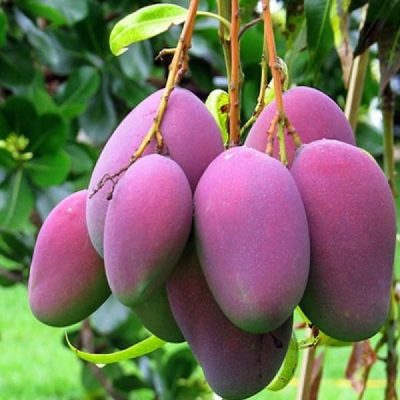
After about 2 years of planting, the trees begin to yield regular harvests. Mangoes grow in clusters of 3 to 4 fruits and turn from green to a characteristic bright pink when ripe. Harvest should take place during cool, dry, and shady weather. After harvesting, store the mangoes in a cool, well-ventilated place. Thai mangoes retain a firm skin even when ripe, allowing them to be transported over long distances without fear of bruising. After each harvest season, clean the orchard and fertilize to help the trees recover quickly and stay healthy.
 Zalo
Zalo