HOTLINE: 0908 340 239
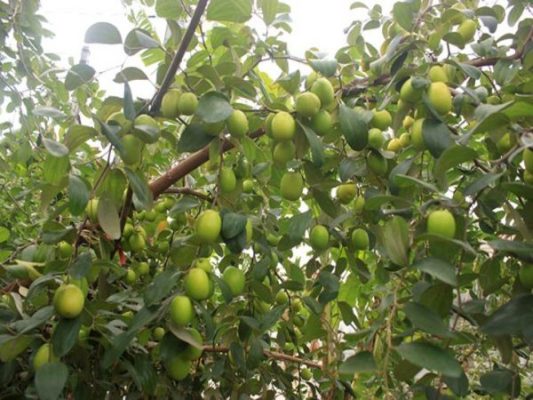
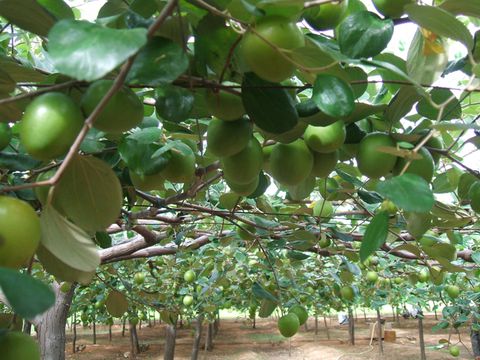
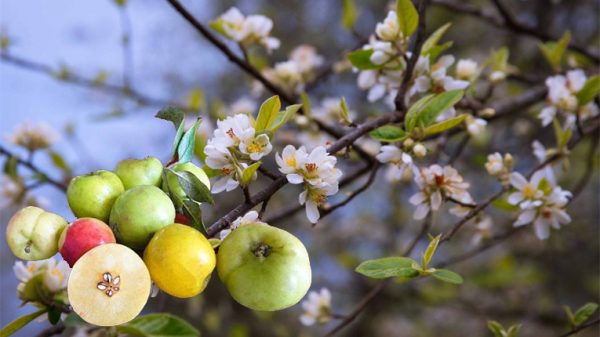
The Dai apple is a long-standing fruit tree well-suited to Vietnam's tropical climate. It is easy to grow, exhibits rapid growth and development, and begins bearing fruit just 1 year after planting. Its simple cultivation techniques, adaptability to all soil types, high and stable yields, and absence of hazardous pests make it highly popular among farmers.
The Dai apple is a late-ripening variety with a harvest window from January 20 to February 25, coinciding with the Lunar New Year (Tet). Yields reach 7–8 tons/ha in Year 1 and 10–12 tons/ha in Year 2. Notably, the Dai Tao 15 variety produces very large fruits with an average weight of 70–100 grams. When ripe, they turn a bright golden color, offering a crispy, refreshing, and sweet taste favored by consumer preferences.
Dai apples can thrive in various soils but prefer sandy loam and alluvial river soils. The ideal temperature ranges from 25°C to 32°C, requiring ample sunlight, sufficient moisture, and a soil pH of 5–7. Their robust, deep-rooting system provides strong resistance to storms, making them suitable for use as windbreaks.
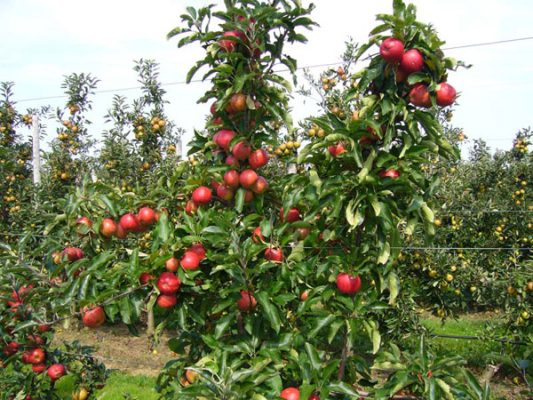
Various apple varieties are cultivated in Vietnam, including sour apples, Thien Phien sweet apples, Gia Loc apples, and newly imported Thai apple varieties. Locally selected cultivars include Apple,..... and Tao Dao Tien.
Apples can be propagated through seeds, stem cuttings, root suckers, layering, and grafting. Because seed propagation causes high genetic variation, seeds are now used exclusively for rootstocks. Cuttings, root suckers, and layering are occasionally used but rare. The most popular commercial methods today are bud grafting and approach grafting.
Timing: The optimal planting season is the end of the rainy season, specifically November to December, because the warm weather allows trees to develop rapidly going into the following spring. Early spring planting is also favorable.
Spacing: Plant in rows or square grids with a spacing of 4–5 meters. For land conservation, closer planting can be utilized, and trees can be thinned out as they mature and expand.
Clear all weeds and plow/harrow the soil thoroughly. When planting on raised beds, dig pits measuring 40 x 40 x 40 cm about one month prior to planting. Fertilize each pit with 1 kg of Better HG01 biological organic fertilizer, 1 kg of superphosphate, and 0.2 kg of Better NPK 16-12-8-11+TE, then build a planting mound 60–80 cm wide and 20–30 cm high.
Apply 20–30 kg of well-rotted organic manure per pit as a basal fertilizer, optionally mixed with 1 kg of agricultural lime and 0.5 kg of superphosphate. Dig pits and apply basal fertilizers 20–30 days before planting. Use container-grown saplings to ensure a high survival rate.
Dig a small hole right in the center of the mound.
Place the nursery root ball level with the surface of the mound, fill with soil, and pack firmly around the root ball.
Mulch a 2–3 cm thick layer of straw or dried grass around the base.
Water immediately after planting using 2–3 ladles of water per tree. Do not water if it is raining.
Irrigation: Provide adequate water, especially during the dry season, during fruit expansion, and close to harvest.
Weed Control: Mulch the base with grass, agricultural waste, or green manure to suppress weeds. Break surface soil crusts after heavy downpours. Perform thorough weeding during the spring season (January–February) and autumn season (August–September), clearing the entire area once per season (cultivating the base 2–3 times a year).
Apple trees must be pruned to rejuvenate the canopy and ensure high yields and quality. There are two primary pruning methods: light pruning and heavy pruning.
Light Pruning: Performed annually after each harvest. Cut back fruiting branches, leaving a 20–30 cm stub. Multiple small shoots will emerge from the tip, which can be thinned out to leave only a few evenly distributed across the canopy.
Heavy Pruning: Designed to shape the canopy from young trees (over 1 year old) up to maturity. Cut back all branches entirely, leaving only short base stubs of a few major branches grown in the previous year. This stimulates vigorous, younger new growth, enhancing yield and fruit quality.
Early Care: 20–30 days after planting, apply diluted liquid fertilizer once a week for the first 1–2 months. Afterward, apply regular periodic top-dressings of NPK compound fertilizer and supplemental foliar sprays.
Application Rates: Apply 0.2–1.5 kg of Sitto Phat 16-16-8-15SiO2+TE per plant per application, depending on tree size. Use a hoe to loosen soil in a circle around the base matching the outer canopy drip line (5–10 cm deep), spread fertilizer, cover with soil, and water. Annually supplement with organic manure and mound soil around the base.
Application 1 (Post-Pruning): Right after pruning the apple trees, loosen soil around the base, apply 10–20 kg of manure + 1 kg of Sitto Phat 16-16-8-15SiO2+TE per tree. Combine with a foliar spray of NANO-S (30 ml per 16-liter tank), spraying evenly across foliage to promote vegetative growth of stems and leaves and enhance drought tolerance.
Application 2 (Pre-Full Bloom): Apply 1–1.5 kg of Sitto Phat 16-16-8-15SiO2+TE per tree. Combine with a foliar spray of Amino Kyto (30 ml per 16-liter tank), spraying evenly to boost immunity and suppress fungal diseases. Apply periodically every 7 days (2–3 times).
Application 3 (Post-Fruit Set): Apply 1–1.5 kg of Sitto Phat 16-8-16-12SiO2+TE per tree (adjusting the amount based on crop load). Combine with a foliar spray of Calcium-Boron (30 ml) + Vita Plant (20g) per 16-liter tank, spraying evenly to maximize pollination and fruit set. Apply periodically every 7 days (2–3 times).
Symptoms: Light brown adult flies lay eggs under the skin of ripening apples. Eggs hatch into maggots that bore into the flesh, pupating later in the soil.
Control Measures: Harvest fruit early before full ripeness. Collect and destroy infected fruits. Use bait traps (basil, pineapple, or banana pulp mixed with Regent 0.3G), or commercial products like Vizubon D and Ruvacon.
Symptoms: Feed by sucking sap from young shoots, flower stalks, and young fruit stems, causing branch tips to curl and fail to develop, resulting in flower and fruit drop.
Control Measures: Spray insecticides such as Actara, Applaud, or Admire, and apply Regent granules around the base to kill and repel ants.
Symptoms: Small black nocturnal moths lay eggs on young fruit. Hatched larvae are pink with small brown heads, boring into fruit to feed. Pupation occurs in surrounding leaves.
Control Measures: Apply Regent 800 WG or Padan 95 SP while fruits are young.
Phytopthora cactorum: Causes severe fruit rot during the rainy season on mature, ripening fruit. Water-soaked lesions turn light brown, darken, and rot softly. Spreads across the fruit causing drop; can also cause collar rot.
Rhizopus arrhizus: Causes fruit skin to turn brown and peel easily. Flesh becomes soft, sour, odorless, and covered in a dense black fungal web that spreads to neighboring fruits.
Control Measures: Collect and destroy diseased fruits. Spray fungicides such as Benomyl, Ridomyl, or Aliette.
Symptoms: Affected fruit exhibits light-colored, soft, water-soaked patches emitting a strong moldy odor. Rot spreads rapidly, liquefying the fruit.
Control Measures: Avoid bruising fruits during harvest and discard infected fruits.
The timeline from flowering to harvest is approximately 4 months. Ripe fruits feature a smooth rind, lighter and brighter coloration, and a pleasant aroma. Because fruits do not ripen simultaneously, harvesting should be conducted in multiple waves.
 Zalo
Zalo