HOTLINE: 0908 340 239
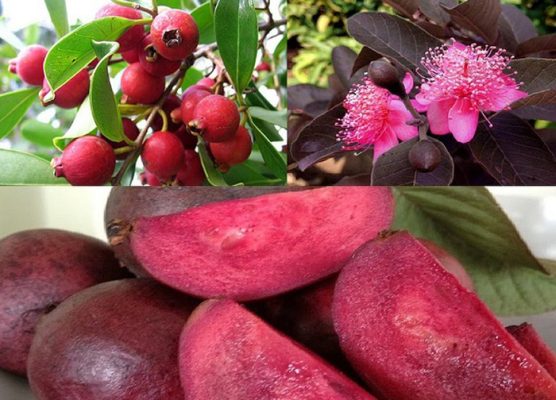
Is the Purple Guava Easy to Grow? – A Guide to Effectively Cultivating the Malaysian Purple Guava
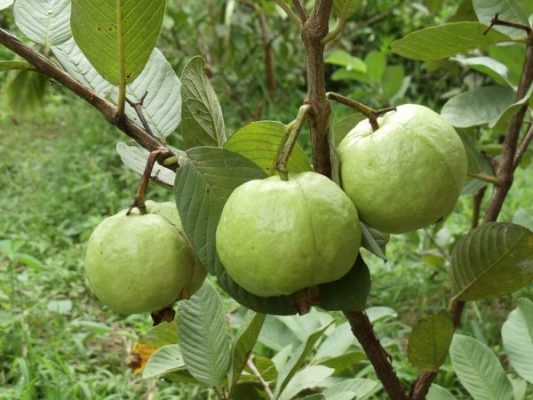
The Malaysian Purple Guava not only captures attention with its unique coloration spanning from its leaves and flowers to its fruit, but it also delivers high economic value, an exotic flavor, and immense popularity today. So, is the purple guava easy to grow? Let's explore the detailed techniques for planting and caring for this cultivar to achieve the best possible yield!
Propagation methods: Malaysian Purple Guava seedlings can be propagated asexually (through branch grafting) or via seeds. To ensure the tree bears fruit quickly and retains the superior traits of the parent plant, purchasing quality Purple Guava Seedlings is the top priority.
Seedling standards: Young plants ready for planting should reach a height of 30 – 40 cm.
Identification traits: Choose grafted trees with a firmly fused graft union, where the scion already displays cotyledons and clear young buds. The minimum height of the graft union should be 15 cm. Note that during planting, you should ideally retain only 2 to 4 bud sprouts.
Whether you are looking for small or large quantities, specialized retailers and wholesalers of Purple Guava Seedlings in Chợ Lách serve as a reliable destination for acquiring healthy, true-to-type saplings.
Planting season: When grown in a garden with meticulous care, the tree can thrive year-round. However, in Northern regions, the most favorable time for planting falls around February and March of the lunar calendar.
Planting distance: The average spacing is 5 x 5m (a density of roughly 400 trees/ha). In fertile soils with heavy fertilization and thorough care, you can space them wider apart. Conversely, with newer, dwarf, and early-yielding varieties, you can plant them more densely.
Pit preparation: Dig planting pits measuring 80 x 80 x 80 cm or 60 x 60 x 60 cm. Apply a basal fertilizer of about 25 kg of truly well-rotted organic manure (equivalent to 10 tons/ha) per pit, combined with 1 kg of superphosphate and 1 kg of potassium sulfate. This pit-digging and basal fertilization process should be carried out 1 to 2 months prior to planting.
Planting technique: The planting procedure is straightforward, yet you must take care not to break the soil root ball, nor plant too deeply or too shallowly. Anticipate the settling of the soil so that after a heavy watering or a severe rainstorm, the root collar remains level with the surrounding ground surface.
Many people mistakenly assume that guava trees are hardy and require zero maintenance. That is a misconception. To harvest delicious guavas with high yields, you must pay close attention to consistent watering and fertilization. Although guava tolerates both drought and waterlogging well, it desperately needs water during the fruit-enlargement stage; coupling this with a well-drained orchard helps minimize pests and diseases to the greatest extent. Regarding nutritional demands, guavas actually require higher fertilizer inputs than citrus trees, particularly nitrogen.
Year 1: Apply NPK compound fertilizer (ratio 12 – 15 – 18), divided into 4 applications per year, using 100g each time combined with 50g of ammonium sulfate.
Year 2: Apply 4 times a year, using 200g of compound fertilizer plus 100g of ammonium sulfate per application (totaling roughly 1,300g/tree/year).
Year 3: Apply 4 times a year, using 300g of compound fertilizer, 150g of ammonium sulfate, and 50g of magnesium sulfate per application (totaling roughly 2,000g/tree/year).
Subsequent years: Once the guava trees enter heavy blooming, you must significantly increase the fertilizer volume, while calculating additional NPK supplements corresponding to the actual harvested fruit yield. Note that about one month prior to flowering, you should supplement with nitrogen-rich fertilizers to stimulate heavier blossoming.
If properly cared for, guavas can begin generating economic yields as early as their third year. By the sixth and seventh years, large-scale productivity reaching 30 – 50 tons/ha is quite common.
Although it is a robust grower, when farmed intensively (especially with improved varieties), the guava tree still encounters certain pests and diseases—particularly during the rainy season—alongside the perpetual need for weed control:
Common diseases:
Glomerella cingulate fungus: Causes growing fruit to halt development and turn black as it becomes covered in fungal spores.
Fusarium and Macrophomina fungi: Typically appear in poorly drained soils, potentially killing seedlings or 3 to 4-year-old trees.
Cephaleuros virescens alga: Produces grey patches on leaves and fruit. These diseases can be managed by spraying copper-based fungicides.
Nematodes: Cause significant damage in sandy soils; require crop rotation, increased fertilization, and regulated watering.
Pests and insects:
June – July: When fruits ripen and their flesh softens, fruit flies (Dacus dorsalis) frequently arrive to lay eggs, causing maggots to bore through and severely ruin the fruit, with damage rates potentially hitting 70 – 80%. Harvest promptly at the correct ripeness, collect and destroy fallen fruit, and combine this with chemical-free attractants (such as Methyl Eugenol or Protein Hydrolysate) mixed with insecticides (such as Malathion).
Sucking pests: (Especially the citrus mealybug Pseudococcus citri), loopers, bagworms, and leaf/young-fruit-eating caterpillars can be controlled using organophosphate or carbamate insecticides.
Weed management: Never allow weeds to grow dense in a guava orchard, as this forces guava roots to forage deeper, preventing them from utilizing topsoil nutrients and diminishing fertilizer efficiency. Use a shallow-bladed hoe to weed around the base or apply safe weed-killing sprays while taking care to avoid getting the herbicide onto the tree leaves.
Pruning and shaping: Tropical fruit trees generally tolerate pruning poorly, but guavas and hawthorns tolerate heavy pruning very well due to their habit of bearing flowers and fruit on new branches. Formative pruning should be conducted early to build a sturdy structural canopy: after pinching the terminal bud to leave 4 framework branches, continue cutting back those framework branches about 3 months later so each supports a pair of secondary branches. After several years of production, prune away older, weaker, or drooping branches to maintain orchard aeration.
 Zalo
Zalo