HOTLINE: 0908 340 239
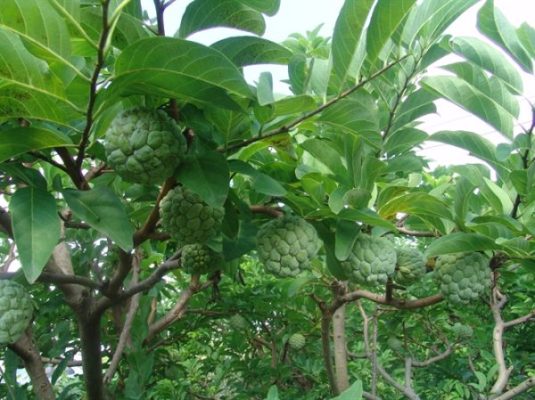
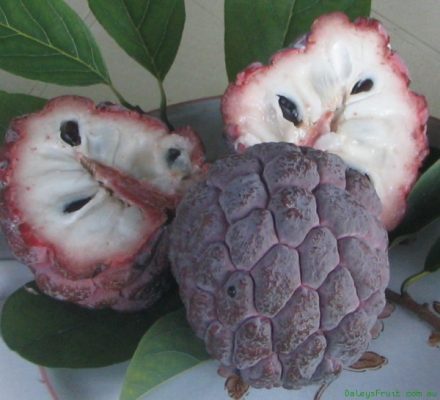
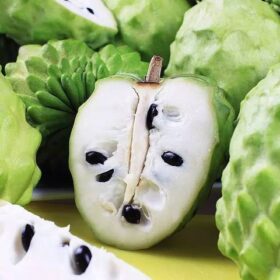
The Thai custard apple (often called mãng cầu na in the Southern region) originates from Thailand and is widely loved in Vietnam today. Thanks to its foreign origin and high adaptability to Vietnam's soil and climate, it has become extremely popular among farmers in recent years.
Growth and Hardiness: Vigorous growth well-suited to Vietnamese soil and climate conditions; strong disease resistance with minimal susceptibility to pests and diseases.
Fruit Quality: Large fruit size (averaging 0.5–0.8 kg, with some exceptional cases weighing 1 kg or more), sweet and mild taste, with very few or even no seeds.
Flesh Texture: Firm, chewy flesh that is less prone to cracking or splitting when ripe, making harvesting and transportation much easier than traditional soft custard apples.
Care Requirements: Easy to care for with no strict demands regarding soil or other climatic conditions.
Canopy and Yield: Average canopy width of about 4 meters, making it suitable for both intercropping and high-density monocropping. Yields fruit after 3 years, with each mature tree producing between 30 and 60 kg of fruit per season.
Seed-grown trees: Seeds are selected from high-yielding, stable trees with uniformly large, delicious fruits and vigorous growth. However, seed-grown varieties carry a higher risk of genetic degradation, leading to lower yields and smaller fruits compared to the parent tree.
Grafted trees: Bud-grafted or branch-grafted plants. As an asexual propagation method, it retains the excellent traits of the variety, ensuring earlier fruit production, higher yields, and greater stability.
Planting Season: Can be planted year-round, from early spring through the end of August or September, provided adequate irrigation is available. Winter planting exposes the young trees to cold weather, causing buds to sprout much slower.
Planting Density: Mature Thai custard apples have a canopy width of about 4–5 meters, so they can be planted densely at intervals of 2x3 meters or 3x3 meters.
Dig planting holes measuring 0.5 x 0.5 x 0.5 meters. Mix topsoil thoroughly with 20 kg of decomposed farmyard manure + 0.3 kg of superphosphate + termiticides (such as Furadan or Basudin). Fill the hole and let it cure for at least 1 month before planting.
In low-lying, flood-prone areas, construct raised beds and dig drainage ditches between rows to help the trees drain excess water effectively.
Use a knife or scissors to gently cut away the nursery bag's plastic layer, taking care not to break the root ball. Place the tree in the very center of the hole with the top of the root ball level with the ground surface. Gently press the soil down around the base. Mound a little extra soil right around the base so it sits slightly higher than the surrounding area to prevent standing water and root rot.
If planted in an open, windy area, insert a support stake to secure the tree.
Form a watering basin around the tree to facilitate irrigation during the dry season. Weeds can be suppressed and soil moisture retained using available materials such as dry grass, rice husks, or straw. Inspect the graft union; once the bark has fused together completely, remove the grafting tape to prevent constriction, slow growth, and breakage.
The tree requires ample water, especially during the dry season, the fruit-development stage, and right before the fruit ripens. Regularly inspect the soil and provide sufficient water. Prevent the tree from wilting, as moisture stress causes heavy leaf drop, which negatively impacts growth and yield.
During the early growth stages, legumes or low-growing green manure crops can be intercropped to improve the soil, suppress weeds, and provide extra income. Only intercrop low-canopy crops without climbing vines.
Weed at least 4 times a year, covering the base with straw, dry grass, or rice husks. Before each fertilizer application, hoe the soil around the base to break surface crusts and maximize fertilizer efficiency. Once the tree canopy closes and shades the ground, weed density will naturally decrease.
Basic Construction Stage (First 3 years): Apply fertilizers high in nitrogen and phosphorus to encourage branch and root development, spaced every 1–2 months. Apply 0.3–0.4 kg of NPK at a 2:2:1 ratio per application, combining it with watering or applying it during rainy/moist weather.
Commercial (Fruiting) Stage: Apply inorganic fertilizers 2–3 times a year, increasing the potassium ratio to enhance fruit quality. Apply 20–30 kg of organic farmyard manure per tree annually; dig a symmetric trench/hole about 20 cm deep around the canopy line for the organic manure, switching to the opposite side the following year.
Micronutrients: Foliar-spray 2–3 times a year during cool weather (avoiding heavy rain and harsh midday sun). Can be mixed with pesticide sprays to save labor and increase efficiency.
Thai custard apples are rarely affected by severe pests and diseases, primarily encountering root mealybugs and fruit mealybugs. Regularly inspect the undersides of leaves and fruit crevices. If mealybugs appear, treat them with pesticides immediately and apply periodic preventative sprays. Commonly used chemicals include Supracid, Bi-58 ND, Applaud, Mipcin, etc. If the tree currently bears fruit, pay close attention to the pre-harvest safety interval listed on the product packaging to avoid leaving harmful chemical residues on the fruit at harvest.
 Zalo
Zalo