HOTLINE: 0908 340 239
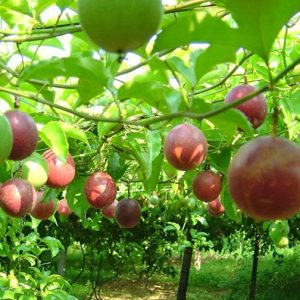
With its sweet-sour, refreshing, and aromatic flavor, passion fruit is a favorite beverage for many people. Not only does it yield delicious fruit, but passion fruit also features beautiful flowers and a lush green canopy that provides excellent shade. Even in narrow urban houses, you can still grow passion fruit, letting it cascade gracefully down from your balcony.
With its dense foliage and fruit-laden branches, the passion fruit plant symbolizes abundance, fulfillment, a large and prosperous family, and domestic harmony.
The passion fruit plant is also known by various other names, such as passion vine, purple granadilla, or sweet cup, and its scientific name is Passiflora incarnata belonging to the Passifloraceae family. There are two main types of passion fruit: yellow (local passion fruit) and purple. The purple variety grows faster and stronger, producing larger, more abundant, and much more fragrant fruit than the local variety.
Passion fruit is a perennial woody climber with a length of about 3-10 meters. Its stems are round, green when young and turning brown as they mature, smooth or slightly pubescent, and represent one of the hardest stems within the passionflower genus. It climbs by means of numerous tendrils. Passion fruit leaves are dark green and glossy, palmate with three lobes, serrated margins, and measure about 6-15cm in size. The flowers feature 5 white and purple petals, presenting a striking and exotic appearance; they are circular and wide-spreading, with a white center accented by a prominent purple ring formed by the stamens and pistils. Passion fruit blooms profusely, leading to high fruit set. Depending on regional climates, passion fruit flowers typically bloom from April to November each year. An individual flower lasts for about a week before setting fruit, with the period from flowering to fruiting taking approximately 60-90 days. The flowers are self-sterile and rely on pollinators such as carpenter bees for fertilization.
Immature passion fruit is light green, turning yellow or purple upon ripening depending on the variety. The fruits are ocherous berries with abundant pulp, measuring about 5-7cm in diameter. Each trellis yields about 40-200 fruits per season depending on the care regimen. If grown in containers, you can harvest a minimum of 30 fruits per root. Passion fruit has a cool, sweet, and pleasantly tart flavor.
Passion fruit is a vigorous climbing plant with a rapid growth rate. It prefers sunlight, brightness, and a warm climate.
The soil for passion fruit does not need to be overly specific; the plant can grow on various terrains ranging from loose, porous, and organic-rich soils—such as light loams, ancient alluvial sands, and feralitic soils—to basaltic red soils. However, the best choice is well-drained soil with a light mechanical composition, an organic matter content above 1%, a pH of 5.5-6, and a cultivation depth of over 50 cm. In flat, warm, and humid regions, passion fruit thrives exceptionally well.
The preferred temperature range for passion fruit is between 16 and 30 degrees Celsius, free from frost.
– Watering Passion Fruit: The passion fruit plant has numerous branches, dense foliage, and a high demand for water and humidity to continuously produce new shoots, flowers, and fruits. It should be watered about once every 2 days, with increased frequency during the dry season.
– Pruning Branches: Regularly prune excess branches and leaves, especially during the rainy season, to reduce fungal activity and suppress vegetative growth, thereby encouraging the plant to produce numerous flower buds and abundant fruit. Upon harvesting a crop, all lateral branches should be pruned back, leaving only the main stem from the ground up to the trellis; otherwise, future growth will be weak and yields will decline.
– Fertilization: After each pruning session, apply adequate fertilizer to help the plant recover quickly and compensate for the nutrients needed to produce new shoots and flowers. Apply fertilizers rich in nitrogen and potassium to boost foliage and fruit development.
– Pest and Disease Management: Passion fruit is susceptible to certain issues such as brown spots, powdery mildew, fruit rot, and fruit flies. Monitoring is essential to implement timely prevention and control measures.
Note: Three critical stages require attentive care: when newly planted, during flowering, and during the fruiting period. When the plant begins to flower and set fruit, thin out the leaves around the forming fruits to ensure they receive adequate sunlight for faster ripening. During flowering and fruiting, water regularly at least twice a day; insufficient water will cause flower drop, fruit shedding, or shriveling.
Propagate passion fruit through seeds or stem cuttings. Remember to set up a trellis to give the plant support to climb on. Harvest the fruits all at once when they are nearly or fully ripe, taking care to avoid bruising, and store them in a cool, ventilated place.
Featuring attractive flowers and an abundance of fruit with evergreen foliage, the passion fruit plant is widely favored for ornamental landscaping to create a lush, vibrant green space. It is commonly grown on trellises or allowed to cascade softly down from balconies to provide excellent shade. Urban homes can grow the plant in boxes or styrofoam containers, providing good care to ensure profuse blooming and heavy fruiting.
Passion fruit is rich in health-beneficial nutrients including vitamin C, vitamin A, potassium, iron, and other elements. With its cooling properties, passion fruit serves as a popular beverage and ingredient for manufacturing refreshing summer drinks.
In some regions, fresh or dried passion fruit parts are used as herbal remedies for insomnia and sedation. Dried stems and leaves are also blended with tea leaves for drinking. Additionally, sedative chewing gum derived from passion fruit is produced commercially.
 Zalo
Zalo