HOTLINE: 0908 340 239
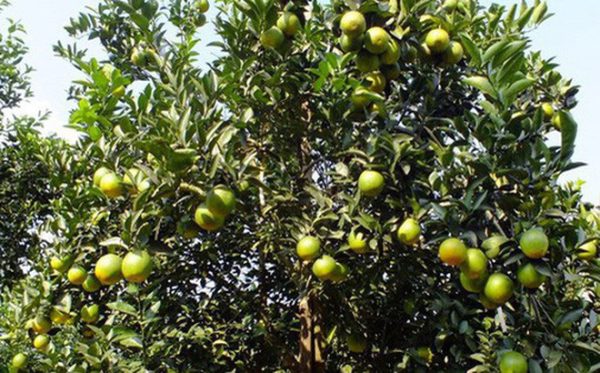
Cao Phong oranges are typically cultivated in low-mountain hilly regions, usually at an elevation of about 300 meters above sea level. Surrounded by limestone mountain ranges, the area features thick, well-aerated topsoil with high nutrient content. Cao Phong orange trees thrive in a temperate climate with temperatures 3 to 4 degrees Celsius lower than surrounding areas.
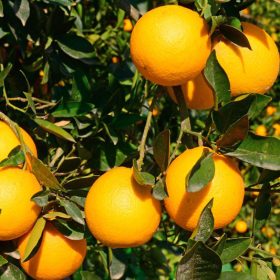
The fruit is smaller than a pomelo, featuring a thin rind that turns orange when ripe, with a sweet or slightly tart flavor. The fruit contains vitamins A, calcium, and fiber. Harvesting typically begins in early November and extends through the Lunar New Year (Tet).
CS1 Orange (Cao Phong Yellow-Core Orange): Features a uniform spherical shape, smooth skin, distinct aroma, thick segments, juicy texture, and a refreshing, sweet flavor. Unripe fruits have a mild tartness combined with a pleasant sweetness. CS1 is the earliest-harvesting variety among all Cao Phong oranges, with the main harvest running from September to November. This early-ripening cultivar grows vigorously, withstands adverse weather, and is widely planted in Cao Phong.
Xã Đoài Cao and Xã Đoài Lùn: These are two strains of the same variety originating from Nghe An, which have been cultivated in Cao Phong soil for decades. They exhibit wide adaptability across northern Vietnam and yield high economic returns.
Xã Đoài Cao has a uniform spherical shape slightly protruding at the bottom, smooth yellowish-orange skin, juicy segments, and a rich, sweet taste with a characteristic strong aroma. It is harvested during the peak Cao Phong orange season, right after the yellow-core oranges.
Xã Đoài Lùn has a uniform spherical shape, light yellow segments, a sweet taste, and a pleasant aroma, harvested at the same time as Xã Đoài Cao.
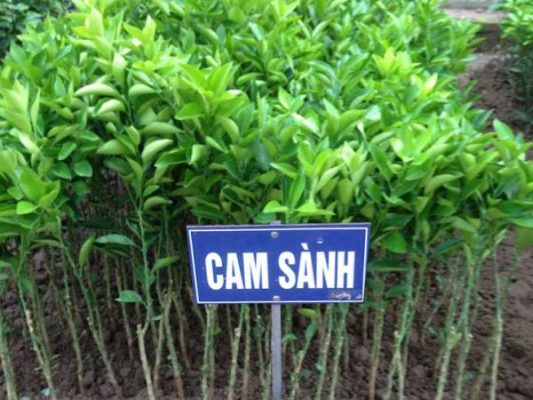
Cam Canh Cao Phong: Though not a new variety, it achieves exceptionally high quality when grown in Hoa Bình soil. The fruit is oblate (flattened sphere) with a thin reddish-yellow rind, yellow segments, and a delicate, attractive sweetness. It is the latest-harvesting variety, and with adjusted crop timing, it can supply abundant fruit for the Lunar New Year market.
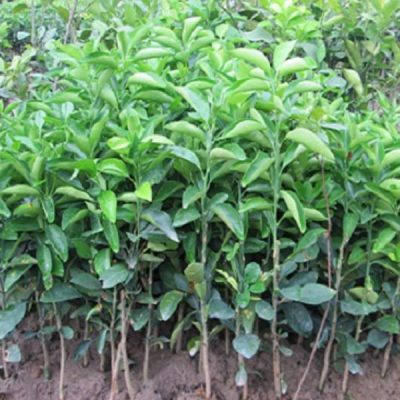
Cao Phong oranges are propagated via grafting or air-layering. Layered branches retain 95% uniformity with the mother tree. Select robust, disease-free saplings with a height of over 50 cm.
Because Cao Phong features Feralit hill soils, light sandy loam is ideal. The soil must be loose, moderately sloped, and well-drained.
Dig planting pits with minimum dimensions of 50 x 60 x 60 cm one month prior to planting. Apply a basal mix of 20 kg of well-rotted manure, 1.5 kg of superphosphate, and 1 kg of agricultural lime per pit, mixing it thoroughly with the soil before filling.
Peel away the nursery bag and place the sapling in the center of the pre-prepared pit. Fill soil level with the root collar, ensuring the graft union faces the prevailing wind. Insert a support stake and water thoroughly to retain moisture.
Fertilization: Apply fertilizer in 4 split doses spaced 2 months apart, running from February through December. Dig a trench around the tree base, distribute organic fertilizer evenly, and cover with soil.
Pruning and Shaping: Begin pruning when the tree is 1 year old and reaches about 40 cm in height. Once primary (Level 1) branches grow strongly, prune to encourage secondary (Level 2) and tertiary (Level 3) branches, ensuring the canopy spreads evenly in all directions.
Maintain the same fertilization schedule as the early stage.
After harvesting, remove interior water sprouts, overhead vigorous shoots (cành vượt), and diseased branches.
Fruit Thinning: Remove small or deformed fruits once production stabilizes, keeping only large, high-quality fruits.
Pest Control: Guard against citrus rust mites (nhện vàng), red spider mites, stem borers, and fruit-eating caterpillars using manual removal or biological control agents.
Harvest when the fruit turns a vibrant, beautiful yellow, feels large, and is juicy. Pick during cool, dry weather using dedicated shears to cut the stems gently. Sort by size and store in a cool, ventilated place to preserve optimal quality. Following harvest, clean the orchard around the tree canopies and prune away old or diseased branches to prepare for the next season.
 Zalo
Zalo