HOTLINE: 0908 340 239
CULTIVATION TECHNIQUES FOR DIEN POMELO (BƯỞI DIỄN) FOR ABUNDANT YIELDS AND JUICY FRUIT
Dien pomelo is a clean, nutritious fruit that delivers high economic value. However, farming households must apply proper and appropriate Dien pomelo cultivation techniques to ensure high and stable fruit quality.
Dien pomelo is a high-value fruit tree. A hectare of Dien pomelo trees after 5 years of age can achieve a yield of 50,000 to 65,000 fruits per year, generating a value of 700 to 900 million VND. Nevertheless, to secure high and stable yields and fruit quality, growers must apply scientific cultivation techniques, sound management practices, and a balanced, adequate nutritional regimen.
To produce high-quality Dien pomelo products that meet domestic market requirements and serve export purposes, farmers must pay close attention to the origin and quality of the planting stock. Experience shows that planting stock expenses constitute only a tiny fraction compared to other costs such as labor, fertilizers, pesticides, and land.
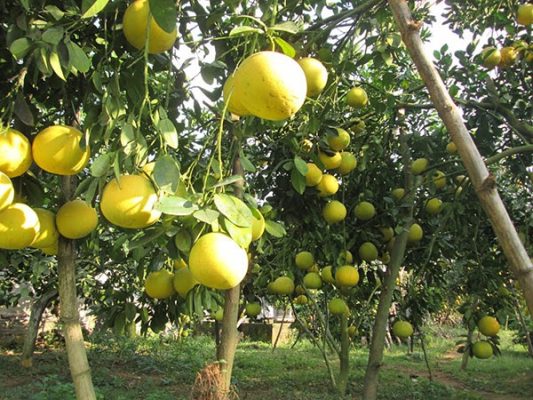
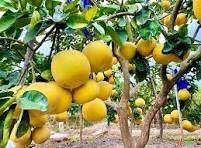
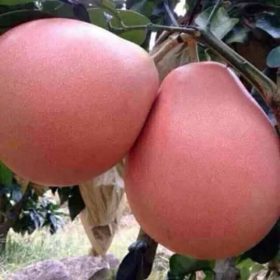
Origin & Characteristics: Originating from Doan Hung – Phu Tho, this variety has been cultivated for a long time (over 100 years) in Phu Dien – Tu Liem – Hanoi. As a local specialty, the tree exhibits vigorous growth and strong branching. Ripe fruits turn a vibrant yellow, have dry segments (tép ráo), taste delicious, and are very juicy. Average weight ranges from 1 to 1.5 kg per fruit.
Planting Season: Spring planting in months 2–4; Autumn planting in months 8–10. Harvest takes place from November to February.
Depending on soil fertility, different densities are applied:
Poor Soil: Medium spacing of 5 x 6 m, with a density of 12 trees per Northern sào (approx. 330–360 sq. meters).
Fertile Soil (High-intensity farming): Can be planted densely. Spacing of 3 x 3.5 m (density of 35 trees per Northern sào) or 3 x 3 m (density of 40 trees per Northern sào).
Soil for Dien pomelo should have a cultivation layer thickness of 1 m or more, with a loose structure to retain moisture, humus, and nutrients while providing good drainage. The ideal pH level ranges from 5.5 to 6.5. Avoid planting in open, windy areas where fruit drop can easily occur. For isolated orchards in open fields, interplanting windbreak trees is recommended.
Pit Preparation: Thoroughly mix all basal fertilizers with the topsoil layer, place it at the bottom of the pit, and backfill to form a mound 10–15 cm higher than the surrounding pit surface. Pits must be prepared at least 1 month before planting.
Planting Procedure: Dig a small hole in the center to fit the root ball, backfill just enough to cover the root ball, and press firmly. Drive an X-shaped double stake next to the plant and tie it securely to prevent swaying, which can kill the tree.
Irrigation: Water immediately after planting. During sunny and dry spells, water once a day until the tree recovers its growth. Adjust watering thereafter based on weather and growth conditions (pay special attention during the first 30 days post-planting).
Pruning & Weeding: Prune the canopy to ensure good air circulation and light penetration, remove diseased branches, and regularly weed around the trees.
Fertilization: Apply fertilizers regularly throughout the year during the post-harvest period. Use a balanced ratio: 10 parts manure + 10 parts superphosphate + 3 parts nitrogen + 3 parts potassium, adjusted according to tree size and available capacity. Dig a trench 25–30 cm wide and 30 cm deep along the canopy drip line, apply the fertilizer, and cover completely.
Regularly inspect the orchard to detect pests and diseases early.
Utilize cultural practices (such as pruning diseased leaves and branches), use biological pesticides and low-toxicity chemical products, avoid banned substances, and adhere strictly to the "4-rights" principle (right drug, right concentration, right time, right method) while monitoring specific major pests and diseases.
Harvest Indicators: Harvest when fruits are mature, displaying the characteristic light-yellow color of the variety. Pick during cool, dry, and shady weather.
Post-Harvest Handling: Sort harvested fruit. If transporting over long distances, pack them into baskets or crates with no more than 5 layers, ensuring straw or paper padding is placed between fruit layers. After harvesting, clean around the tree canopy, prune aged and diseased branches, and resume regular care.
 Zalo
Zalo