HOTLINE: 0908 340 239
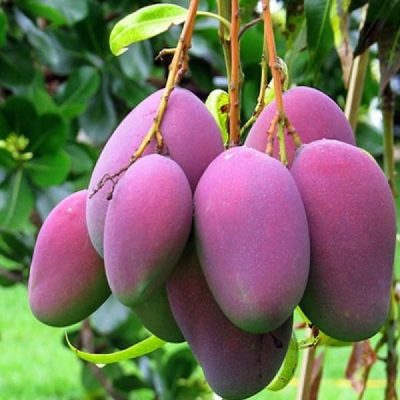
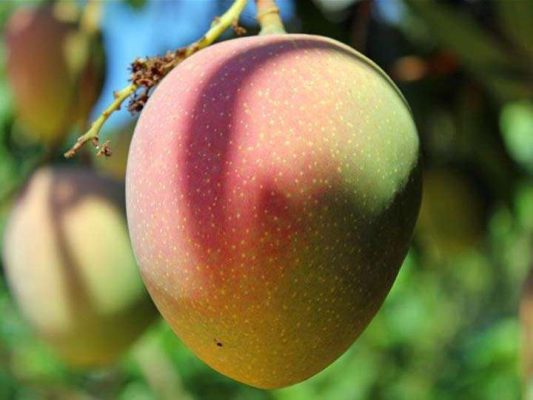
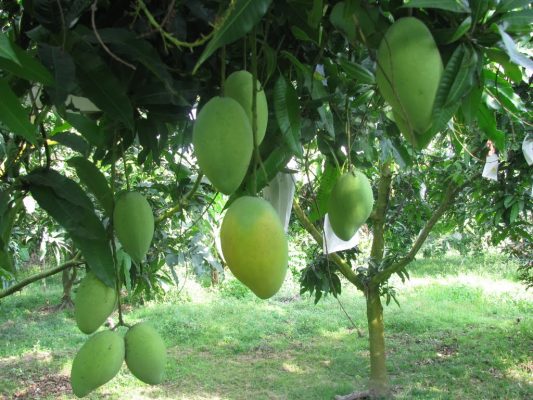
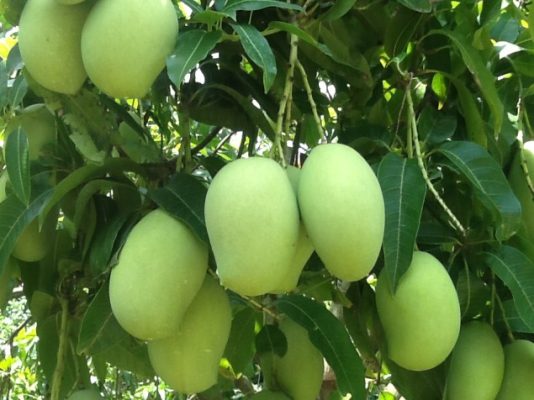
This eye-catching purple mango variety was successfully propagated by the Thailand Agricultural Technology Transfer Center, originating from a Taiwanese mango type. Unripe, this mango has a green skin like many other varieties, but as it ripens, the fruit gradually turns a striking purple color. The flesh inside is a deep yellow, offering a cool, sweet, and fragrant taste.
The credit for first bringing this mango variety to Vietnam goes to a farmer in Soc Trang. Afterward, the mango was widely cultivated and favored by many.
Being a novel variety, the purple mango is sought after by many for its unique appearance and taste. A ripe fruit can reach a weight of 0.8 to 1.2 kg and can be processed into various dishes or eaten fresh when ripe. It is one of the fruits richest in carotene, a substance that converts into vitamin A during absorption in the small intestine. According to studies, mangoes contain three times more iron than other fruits, making them exceptionally beneficial for pregnant women and anemic individuals.
As a novel crop with high nutritional value, the purple mango brings good harvests and profits to farmers, prompting many to try growing it. As long as certain crop standards and good care are maintained, productivity will be high.
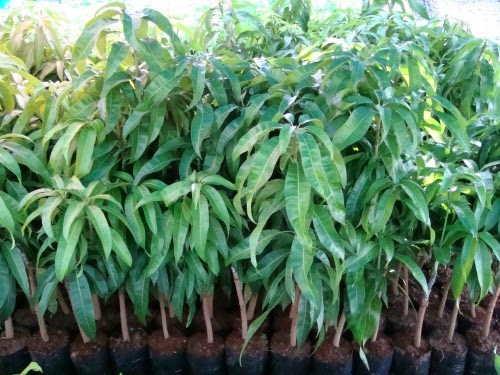
Selection: When planting, choose grafted saplings that are healthy, disease-free, and true-to-type. The graft union should be 15–20 cm from the base, with a sapling height of 50–70 cm measured from the top of the nursery bag.
Season & Density: The most suitable time to plant purple mangoes is during the rainy season to ensure an adequate water supply for growth. Pay attention to spacing and density to ensure the trees can develop wide canopies and bear abundant fruit. Practical experience shows that mixing organic fertilizer with the initial planting soil helps trees grow tall and plump quickly.
Fertilization: Divide growth into specific care stages for basal and supplemental fertilizing to provide timely nutrients.
Watering: The most critical times for watering are during dry spells and when the fruit is nearing maturity to ensure the fruit remains sweet and crisp.
Pruning: Annually after harvesting, prune away diseased branches, shaded inner branches, and unbalanced limbs to keep the canopy well-ventilated. Pruning should be done right after the fruit harvest to easily manage subsequent flowering.
Pest and Disease Control: The biggest challenge in growing purple mangoes is pest and disease management. This variety is susceptible to powdery mildew, black mold, leaf blight—leading to rotted/dropped blossoms, blackened fruit—and fruit flies. Regularly removing diseased leaves and periodically spraying with Bordeaux mixture upon detecting symptoms will quickly repel pests and protect the sustainable development of the trees.
Harvesting: Harvest at the right time when the fruit is mature and the skin gradually transitions to its characteristic purple color. Harvest during cool, shaded, and dry weather. Categorize the harvested fruit. If transporting over long distances, pack them in baskets or boxes with no more than 5 layers, using straw or paper between the fruit layers. After harvesting, clean around the tree canopy, prune old and diseased branches, and continue caring for the tree.
For growers, the purple mango is a novel crop with high development potential in the Vietnamese market. Succeeding in cultivating this variety will undoubtedly bring positive changes to farmers' livelihoods.
 Zalo
Zalo