HOTLINE: 0908 340 239
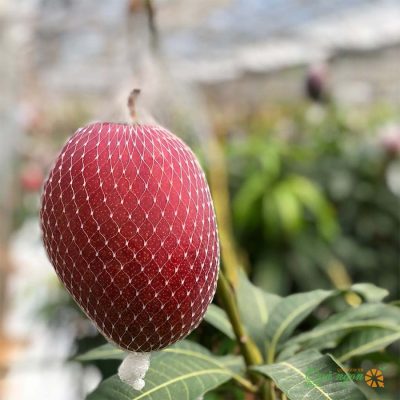
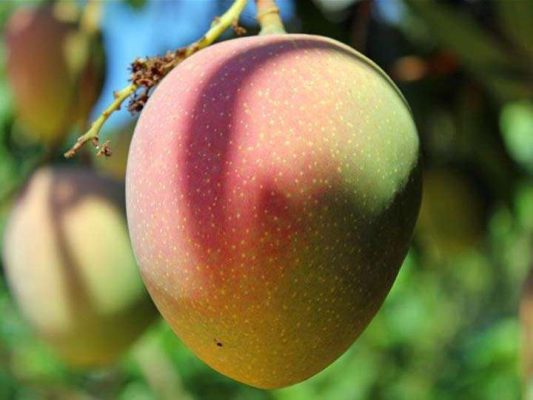
True to its name, the Japanese red mango is a fruit originating from the Land of the Rising Sun (which always produces some of the most unusual products in the world). This unique red-colored mango variety is dubbed the "Egg of the Sun"—specifically the Taiyo no Tamago mango from Miyazaki, or the widely famous Miyazaki red mango (Miyazaki is Japan's second-largest mango-growing region after Okinawa), with peak harvest season running from May to June every year. The closer it gets to peak season, the larger and sweeter the red mangoes become. This red mango is advertised to have a sugar content 15% higher than regular varieties, along with very high nutritional content such as iron, calcium, and antioxidants. Its defining characteristics are an eye-catching red skin, thick flesh, and a small seed—qualities that other mango varieties simply cannot match.
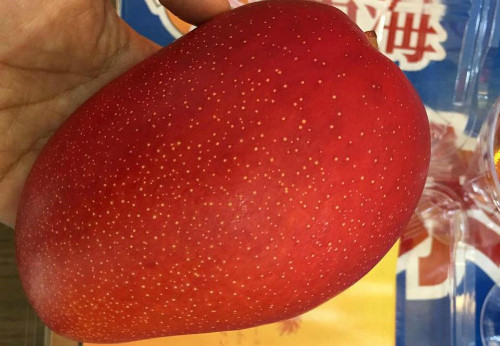
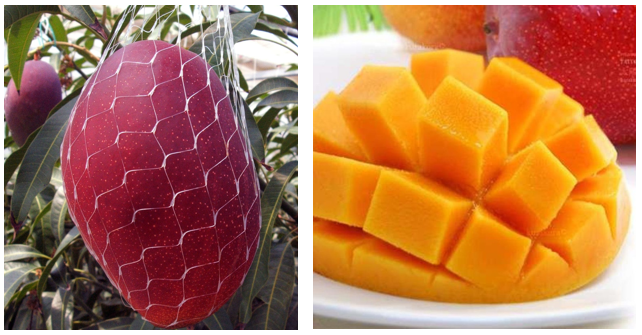
To produce these ultra-luxury red mangoes, the cultivation and preservation processes are extremely rigorous, true to the Japanese working style. The mango trees are grown in greenhouses to minimize pests and diseases; fruit-bearing branches are tied upward, and smaller fruits are pruned off to concentrate nutrients on the larger ones. When ripe, the mango drops naturally into a mesh bag wrapped around it to prevent it from falling and bruising. It is then delivered directly to consumers.
Earlier, in 2014, internet users were stunned by the news that two mangoes—part of 231 pairs of fruits displayed at a wholesale market in Miyazaki prefecture, southern Kyushu, Japan—were priced at 3,000 USD (equivalent to more than 60 million VND). The finest mangoes here are sold in pairs rather than by weight, yet they remain extremely, incredibly popular and in high demand. The prices of the highest-grade red mangoes have continued to rise ever since.
Since it is already such a hit back home in Japan, how would it be received when visiting Vietnam? Well, right as the craze for the yellow-skinned star apple started to cool down, just at the beginning of the season, Miyazaki red mangoes from Japan began being sold at astronomical prices compared to other mango types: from 1.3 to 1.7 million VND per fruit (for a 350g mango). Even though they are sold at "eye-watering" prices, they still attract intense buyer attention.
According to a revelation from an imported fruit shop owner on Doi Can Street (Hanoi), who imported over 200 kg of this mango variety from Miyazaki, Japan:
"Right in Japan, the price of red mangoes is already very high, so the price upon arriving in Vietnam is not cheap either. Offered at 1.7 million VND per fruit, they completely sold out (‘out of stock’) after 5 days, bringing in a revenue of around over 300 million VND."
Most customers are captivated by the fruit's beauty due to its unusual deep red color, uniform size, and special flavor. Each fruit weighs an average of about 300g. When sliced open, the mango flesh is a vibrant golden-yellow, with a small seed and—thanks to its high sugar content—it is 15% sweeter than regular mangoes. Because of its unusual color and delicious taste, this fruit quickly caused a "frenzy." Currently, priced at over 1.5 million VND, the Japanese red mango variety is dozens of times more expensive than domestic mangoes or Thai and Taiwanese mangoes on the market.
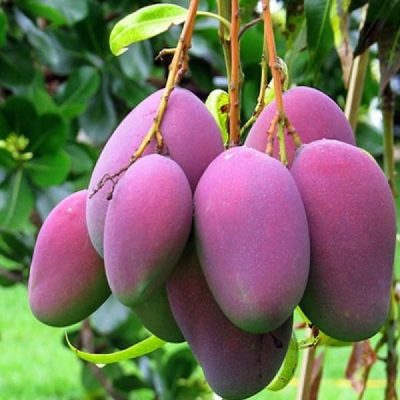
It is known that in Japan, mangoes that meet high standards and command higher prices must weigh at least 350g, have at least one side turning bright red with small, fairly even spots appearing on the skin. Additionally, the market has also welcomed a Taiwanese red mango variety with a similar flavor, but slightly cheaper than the "Sun Mango," priced at around 600,000 VND per kg (about 2 fruits).
 Zalo
Zalo