HOTLINE: 0908 340 239
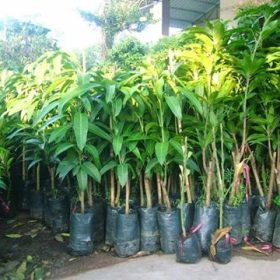
If you visit Hoa Loc commune in Tien Giang province, you will see vast orchards dominating the landscape. Among the most widely cultivated is the sand mango, a variety famous nationwide for its exceptional taste.
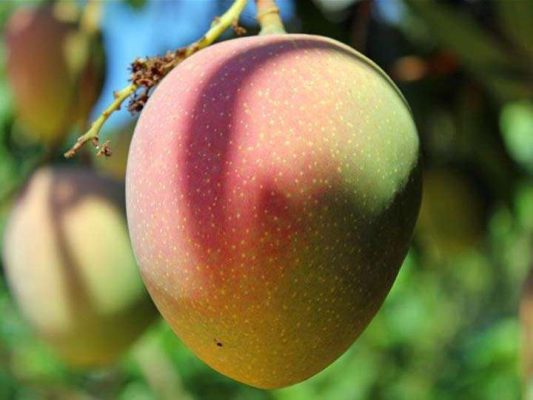
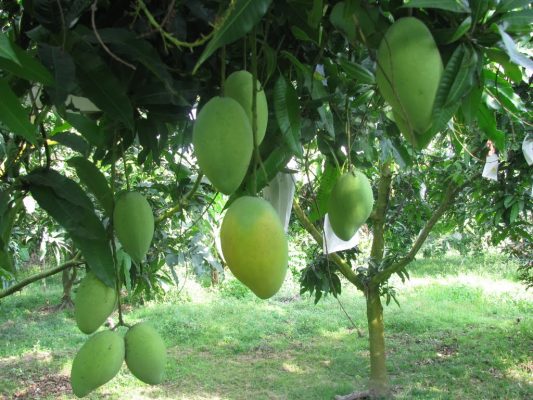
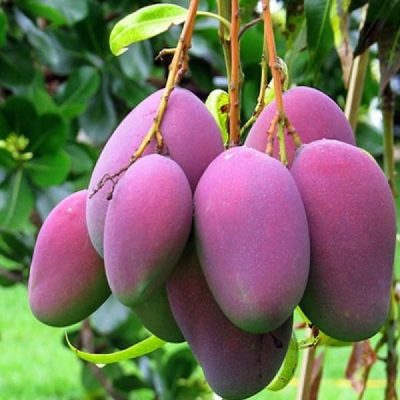
Appearance: The fruit features an elongated shape with a pointed tip and a rounded stem base.
Size and Weight: Each ripe mango typically weighs between 450 and 500 grams.
Color and Texture: When ripe, it boasts an eye-catching bright yellow skin covered in a fine powdery bloom.
Flesh: Unlike other varieties, the skin is quite thin. It has thick flesh, a very thin flat pit, a rich sweet flavor, and minimal fiber.
Economic Value: Due to its high economic return and superior traits compared to other fruits, the cultivation area for this variety is continuously expanding.
This variety boasts excellent health and vigorous, rapid growth, capable of bearing fruit just 24 months after planting. It thrives in well-watered, cool environments and adapts to various soil types throughout the year.
Because this mango prefers high moisture, the ideal planting time is at the beginning of the rainy season, typically from May to July.
This adaptable tree can be planted in many soil types. The primary requirements are loose, well-draining, and non-saline soil.
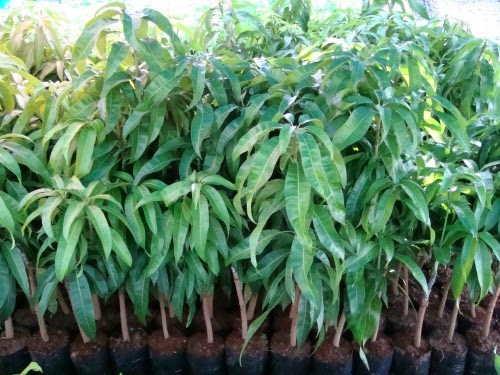
Site Preparation: Clear the planting area of weeds and dense brush. Create raised beds of at least 60 cm in height to prevent waterlogging during heavy rains.
Spacing and Pits: Dig planting holes measuring at least 50 x 50 x 50 cm, maintaining a minimum distance of 5 meters between each pit.
Soil Mixture: Before planting, prepare a mound mixture using a ratio of 2 parts garden soil, 1 part well-rotted manure, and 1 part rice husk ash. Enrich this mixture with 0.2 to 0.3 kg of 16-16-8 NPK fertilizer.
As a tropical plant, the mango tree has high water demands.
Initial Stage: Water every 2 days for newly planted trees.
Canopy Development: Water based on the soil's moisture levels.
Timing: Always water in the early morning or late afternoon. Avoid midday watering to prevent the tree from wilting and dying.
Critical Periods: Water is most crucial during the newly planted stage and the flowering/fruiting phase.
Adjust fertilizer applications based on the tree's health and soil fertility.
Years 1–2 (Foundation Stage): Apply fertilizer 3 times a year. Use 150–300g of 16-16-8 NPK and 100–200g of Urea per tree annually. Alternatively, dilute 1 tablespoon of 16-16-8 NPK and 1/2 tablespoon of Urea in a 10-liter bucket of water, applying it to the base (5-6 bases per bucket) every 30 days.
Year 5 Onward (Harvest Stage): Divide fertilization into 3 phases based on an annual formula of 1.09 - 0.9 - 0.96 kg of NPK per tree.
Post-harvest: Apply 550 - 300 - 240g of NPK per tree.
30 days pre-flowering: Apply 200 - 350 - 250g of NPK per tree.
2 weeks post-fruit set: Apply 350 - 300 - 450g of NPK per tree.
Initial Pruning: Around the 5th month, pinch off the main tip to encourage primary branches. Retain 2 to 3 shoots that spread evenly in different directions.
Further Development: If space permits, you can continue pruning to develop secondary and tertiary branches. More branches generally lead to higher fruit yields.
Annual Maintenance: Regular pruning must be done every year after harvest to remove diseased or damaged branches and prepare the tree for the next blooming season.
Monitoring: Care for the tree meticulously to quickly detect and treat any abnormalities.
Flowering Care: Provide even watering and supplemental fertilizer when the tree blooms synchronously to build up its strength.
Fruit Bagging: Once the fruits have developed for about a month and reached a certain size, wrap them in specialized thin paper bags. This minimizes pest damage and ensures the fruit maintains a flawless, unblemished appearance.
By the third year, the tree is ready for its first harvest. With proper techniques, yields will steadily increase in subsequent years.
Begin selective harvesting when the fruits reach the appropriate size and the skin turns a glossy yellow. Handle the fruits gently during transport to avoid bruising, as bruised mangoes will spoil quickly. Store in a cool, well-ventilated area to preserve peak freshness.
 Zalo
Zalo