HOTLINE: 0908 340 239
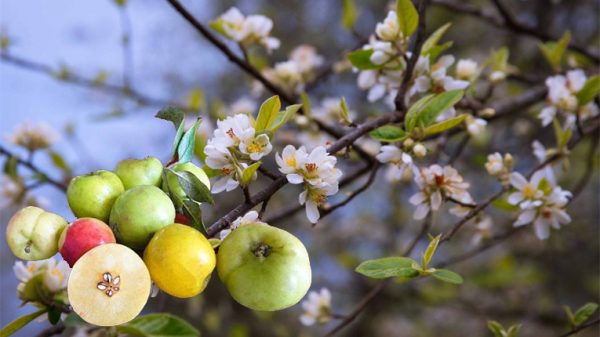
Hawthorn, commonly known in Vietnam as Táo mèo or Sơn tra, is a renowned specialty of the Northwest mountainous region and a favorite among many. This plant offers numerous health benefits, including detoxification, body cooling (thanh nhiệt), improvement of blood lipid profiles, enhancement of vitality, and stimulation of the digestive system. However, detailed characteristics and information regarding hawthorn are not widely understood.
Scientific Classification: Belonging to the Rosaceae (rose) family, the tree typically reaches a height of 2 to 5 meters.
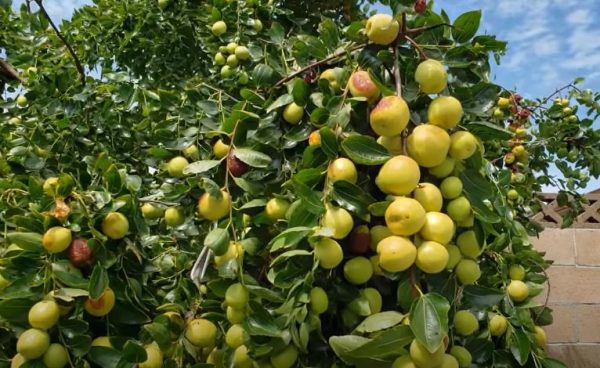
Foliage & Stems: It is a semi-evergreen woody plant. Young branches feature dense pubescence and a brownish-purple bark, which transitions to a dark brown, hairless surface as the tree matures.
Leaves: Green, lanceolate leaves feature pointed apexes and rarely exhibit serrated margins. Leaf stalks are covered in fine pubescence and grow up to 2 cm in length.
Flowers: Flowers do not bloom individually but appear in clusters of 3 to 5 blossoms. The calyx is covered in fine hair, resembling a small bell.
Fruit: The fruit is spherical, measures roughly 2 to 4 cm in diameter, and has a light yellow hue. Harvesting season typically occurs annually in August and September.
Hawthorn thrives at high altitudes ranging from 2,000 to 3,000 meters above sea level along mountain slopes. It is widely distributed across several Asian nations, including India, Bhutan, Thailand, Vietnam, and southwestern China.
In Vietnam, the tree grows wild in the mountainous northern provinces of Yên Bái, Lào Cai, Hòa Bình, Sơn La, and Lai Châu.
Hawthorn comes in several regional variations. While their morphological structures remain largely similar, they are categorized as follows:
Wild Mountain Hawthorn (Táo mèo rừng): Harvested directly from the wild by ethnic minority communities rather than cultivated. The fruit features a greyish-green skin, a non-crisp, non-sweet texture, and a mildly astringent taste.
Yên Bái Hawthorn: Grown in a local climate ideally suited for its development, yielding the most characteristic flavor profile. These fruits are typically small, with a translucent golden color and a fragrant, moderately sweet taste upon ripening.
Hà Giang Hawthorn: Unripe fruits show a faint pinkish-green tinge, maturing into a distinctive pink color. Highly prized as a local specialty, this variety is frequently utilized for wine steeping.
Sa Pa Hawthorn: Characterized by uneven sizing, a dark tip at the crown, and a light pink rind. It tends to be less sweet and slightly astringent, yet rich in nutrients with a signature aroma.
Chinese Hawthorn: Typically smaller, uniform in size, and aesthetically pleasing. However, the internal flesh is less flavorful, featuring a spongy texture, a dull color, and a faint medicinal aroma.
Hawthorn delivers substantial health benefits whether consumed fresh or dried:
Boosts the body's immune function.
Provides purifying and antibacterial properties.
Supports and maintains stable digestive function.
Offers excellent skincare properties.
Improves liver and kidney function.
Hawthorn wine has long been used to alleviate digestive, blood pressure, and cardiovascular conditions, while notably supporting vitality.
Step 1: Selecting Fruit: Choose small hawthorn fruits without needing oversized specimens. True wild hawthorn should taste both sour and astringent.
Step 2: Preparing the Jar: Wash a glass storage jar thoroughly, rinse it with high-proof alcohol or boiling water, and let it dry completely.
Step 3: Preprocessing: Wash the harvested fruit multiple times with water, trimming away bruised sections and stem/calyx ends. Keep the fruits whole or slice them in half, then soak in diluted saltwater for 30 minutes. Rinse once more with clean water and drain completely in a basket.
Step 4: Steeping Process: Arrange hawthorn fruits, sugar, and liquor in a ratio of 2:3:1, layering fruit and sugar alternately until finished. Let it steep for about 1 week, drain off and discard the resulting liquid extract, then pour liquor over the fruits until completely submerged. Seal tightly and store in a dry place. The wine is ready for consumption after roughly 1 month.
While beneficial, hawthorn wine is not suitable for everyone.
Recommended For: Individuals with hypertension, cardiac conditions (including cardiac weakness), hyperlipidemia, fatty liver, hepatitis, those seeking immune support, and people with poor digestion suffering from poor appetite or gastrointestinal disorders.
Contraindications: Individuals with a history of hypotension and pregnant women should avoid consumption as it may cause adverse health effects.
 Zalo
Zalo