HOTLINE: 0908 340 239
DỊCH TIẾNG ANH NHA
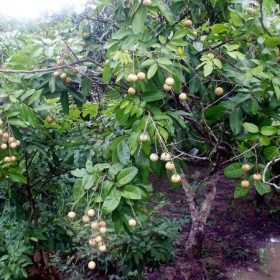
Not only does it yield high productivity, but the Ha Tay late-crop longan (nhãn muộn Hà Tây) also possesses a much more delicious flavor than other longan varieties. Thanks to its exceptional quality, this variety was officially granted a national brand by the Ministry of Agriculture in 2007.
The longan has long been a familiar crop yielding high economic value in our country. Compared to neighboring countries like China and Thailand, Vietnamese longan varieties boast many prominent advantages such as rapid growth, high productivity, and superior fruit quality, prompting strong investment and development.
One of the most widely cultivated longan varieties today is the Ha Tay late-crop longan. Since 2007, when it was awarded a national brand by the Ministry of Agriculture, the cultivation area for this variety has continuously expanded.
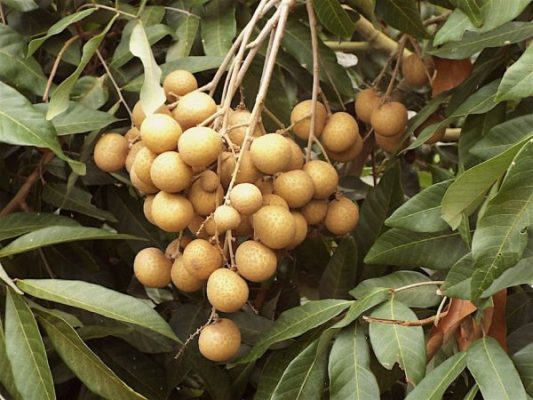
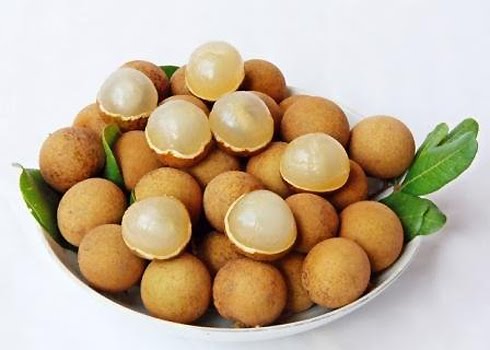
The Ha Tay late-crop longan offers numerous advantages over other varieties, such as larger fruit size, thick juicy pulp, and high sugar content. Furthermore, the skin of this late-crop longan is quite thin, making it very easy to eat. On average, one kilogram contains about 105 fruits. The Ha Tay late-crop longan has the longest and latest harvest period among longan varieties, lasting about 50 days.
Ha Tay late-crop longan is evaluated for its strong resistance to pests and diseases, high waterlogging tolerance, and adaptability to various regions while maintaining delicious fruit quality and high productivity. Due to its characteristic later harvest time compared to other varieties, it commands higher market prices, making its economic development potential very high.
Currently, Ha Tay late-crop longan is propagated and cultivated using asexual propagation methods, which offer the advantages of stable quality, preserved genetic traits (preventing degeneration compared to seed-grown trees), and quicker fruit production. When selecting saplings, choose robust, healthy plants about 40 cm tall with a complete root system to ensure the best growth and development.
Ha Tay late-crop longan can be planted year-round under our country's climate. However, note that if planted during the rainy season, proper drainage must be arranged to prevent waterlogging. If planted during the dry season, adequate watering must be provided to ensure good development.
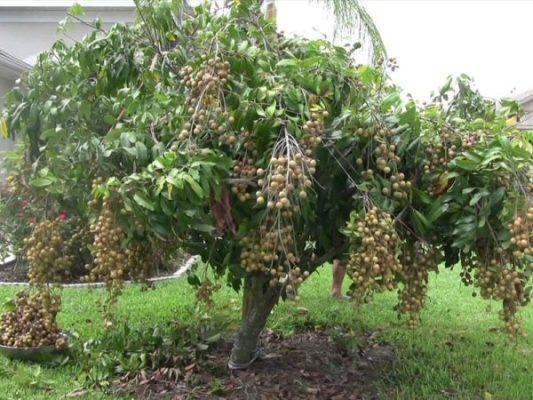
Due to its tall and wide canopy, the optimal planting distance is 6 m. At this density, approximately 300 to 350 trees are planted per hectare.
Before planting longans, prepare the land thoroughly by clearing weeds and loosening the soil. Low-lying areas should be carefully mounded up to a height of about 50 cm. Pits for planting late-crop longans must have minimum dimensions of 60 x 60 x 60 cm, typically shaped as squares or circles.
Before planting, apply a basal fertilizer to the pit. The required fertilizers typically include 20 kg of well-rotted manure, 1 kg of superphosphate, and agricultural lime for disinfection. Mix the fertilizer with the soil and compost it for 1 month before planting to allow the soil to absorb nutrients and eliminate all pathogenic germs.
Choose cool, rain-free weather for planting. When planting, remove the nursery bag and gently place the plant upright. Fill the pit with soil and pack it down firmly. Water immediately after planting to help the tree root quickly and regain its vitality.
Ha Tay late-crop longan has a moderate water requirement. Critical times to ensure an adequate water supply are when the tree is growing, when the fruits are ripening, and during dry seasons. Note that proper drainage must be ensured after the rainy season to keep the root zone well-aerated. During the dry season, after watering, cover the base with straw to prevent soil moisture evaporation. Annually loosen the soil periodically during the autumn and spring seasons.
To increase tree productivity, canopy pruning and shaping are essential. More branches and twigs will lead to heavier fruit yields. Pruning is conducted in multiple phases, specifically as follows:
Phase 1: When newly planted shoots grow long, prune the tips to develop primary framework branches (Level 1). Leave only 2–3 main branches to nurture. After these primary branches grow long, prune their tips to develop secondary branches (Level 2). Continue this pruning process to shape the tree into a rounded form.
Phase 2: When the tree blooms, prune out diseased flower clusters. Thin out overly dense or small flower clusters. Leaving a moderate amount of blossoms ensures better fruit quality and higher productivity.
Phase 3: After each harvest season, cut away all diseased, aged, and water-sprout branches. Leave only large, healthy branches to keep the canopy airy, reducing pests, diseases, and nutrient waste.
Depending on the tree's health and soil nutrients, apply additional fertilizer. For trees aged 1–3 years after planting, fertilize 3 times a year, spaced 3 months apart. Apply 1 kg of NPK 20:20:15 fertilizer per base.
Trees older than 3 years enter the annual harvesting stage; apply increasing doses of fertilizer each year. In heavy crop years, increase fertilizer by an additional 10%. Apply approximately 3–5 kg of NPK 15:10:15 fertilizer per base.
Ha Tay late-crop longans are harvested about 50 days later than other longan varieties. When you notice the fruit turning a smooth brown color, it is ready. Upon tasting, the pulp is soft with a sweet, nutty flavor. Harvest the fruit on sunny, dry days without rain, as rain dilutes the flavor. Use shears to cut each cluster and store them in a cool, ventilated place to keep the fruit fresh longer.
Care must also be taken during preservation to avoid bruising the fruit. They can be placed in baskets lined with straw and transferred to a cool storage area.
 Zalo
Zalo