HOTLINE: 0908 340 239
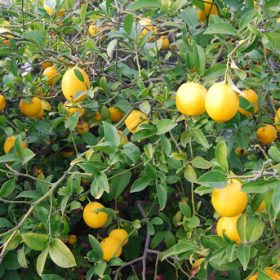
Lemon trees can be planted almost year-round. However, if planting during the rainy season, attention must be paid to proper drainage, as excessive rain can compact the soil and cause the tree to die from root suffocation.
Nutrient-rich, well-draining, and very loose soil makes growing lemon trees much easier.
Select healthy, pest-free seedlings that offer high yields and consistent harvests. If using propagated plants, grafted saplings are recommended.
Planting should be done on a dry, sunny day, preferably in the early morning when the weather is cool. Before taking the root ball out to plant: – Take dry surface soil or dried canal soil and chop it finely. – Mix in a combination of well-rotted manure, rice husk ash, and superphosphate fertilizer. – Add a small amount of insecticide to treat mealybugs and root-knot nematodes. – Form the mixture into a raised mound. Gently place the root ball into the hole, ensuring the lemon tree stands upright. Dig a small pocket to set the plant so that the surface of the root ball matches the mound level. Next, fill in the soil around the surface and firm it gently around the root collar. Stake the young plant with a small stick to keep it upright, preventing wind from disturbing the base and helping young roots develop faster.
Fertilization Regime: From the time of planting until the new shoots reach the semi-hardened stage, apply a small amount of NPK fertilizer or spray foliar fertilizer to encourage the tree to flush new shoots uniformly. Alternatively, pinch back excessively long tips to shape a rounded canopy and prevent wind breakage. In the first year, apply top-dressing using 1 tablespoon of urea fertilizer dissolved in a 10-liter sprayer to water the plant, doing this 3 to 4 times a year. Lemon trees are easy to grow and maintain; however, to achieve high yields and quality, they need adequate nutrition like any other crop.
Inducing Flowering and Fruiting: First, pluck off any small fruits present on the tree. Use garden shears to prune away vigorous shoots, old branches, inner twiggy growth, and small branches inside the canopy to improve air circulation and help summer and autumn branches mature earlier. At the main time, use a toothed iron rake to lightly loosen the soil around the base to sever some roots, preparing the tree for flower bud differentiation and blooming early next year (February-March). Around early December, completely stop watering to induce drought stress for about a month. Afterward, resume fertilization and water thoroughly for 2-3 consecutive days to trigger uniform blooming. If it rains, cover the base tightly with plastic sheeting to prevent rainwater from soaking the root zone.
American lemon trees yield fruit starting from the second year onward. The period from flowering to harvest takes about 3 months. Harvesting should be done in the morning on a rain-free day, and the fruits should be stored in a cool, ventilated place for optimal quality.
 Zalo
Zalo