HOTLINE: 0908 340 239
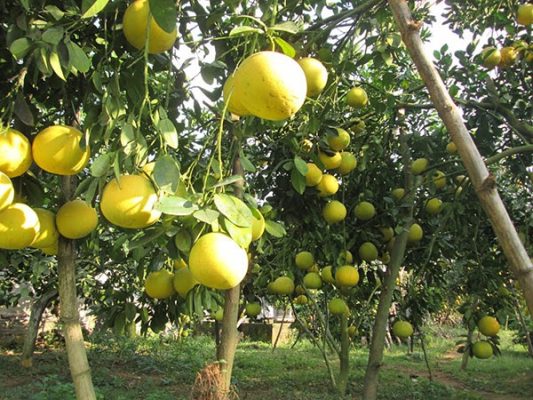
Unlike other traditional Vietnamese pomelo varieties, the super-sweet pomelo—also known as the "two-season sugar pomelo"—originates from Thailand and was only introduced to Vietnam in recent years. With its distinct sweetness, the super-sweet pomelo quickly became the focal point of consumer attention.
The super-sweet pomelo is a woody tree with a wide canopy and an average height of about 3.5 meters. Its leaves are quite large and long with broad lobes, resembling orange leaves. Aside from sheltering the fruit, the leaves are widely utilized for various everyday applications.
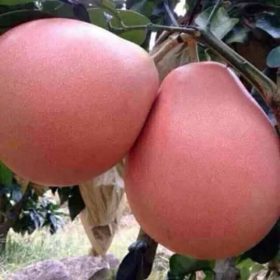
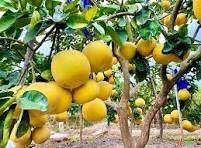
The super-sweet pomelo yields very large, firm fruits with an evenly rounded shape, averaging 0.9 to 1.5 kg per fruit. When ripe, the peel is thin and easy to peel just like an orange skin, lemon-yellow in color, smooth, and glossy. Each pomelo segment is thick and features an eye-catching yellow hue. The fruit possesses a distinct, exceptionally sweet flavor without the bitterness or harsh aftertaste typical of ordinary pomelo varieties.
The super-sweet pomelo exhibits excellent growth vigor and high disease resistance even in harsh, nutrient-deficient environments. Consequently, it is very easy to grow and maintain while still delivering high yields. The tree boasts a relatively long average lifespan, with some specimens living up to 20 years while continuing to produce high-quality fruit. This variety typically yields two harvests per year, with each cycle lasting 6 months, which is why it earned the moniker "two-season sugar pomelo."
Recent studies show that the super-sweet pomelo offers exceptionally high nutritional value for human health, particularly for the elderly and young children. It contains abundant minerals and vitamins that are highly beneficial, supplying vital nutrients to keep the body energized and resilient. Additionally, consuming super-sweet pomelo effectively and safely supports weight loss without causing nutritional deficiencies. It is also highly effective in supporting the treatment of respiratory ailments such as hoarseness, fever, and mild colds, as well as digestive issues like stomachaches and indigestion.
(Super-sweet pomelos yield very high productivity when properly cared for.)
With its signature intense sweetness and delightful aroma, the super-sweet pomelo is a top choice for customers. Because it yields two crops a year, this variety generates double the economic value compared to single-season pomelo varieties. Furthermore, the super-sweet pomelo is being exported to many neighboring countries, bringing tremendous economic efficiency to pomelo growers.
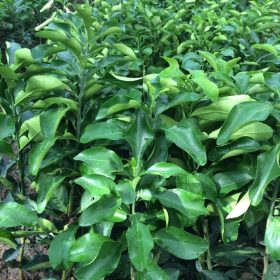
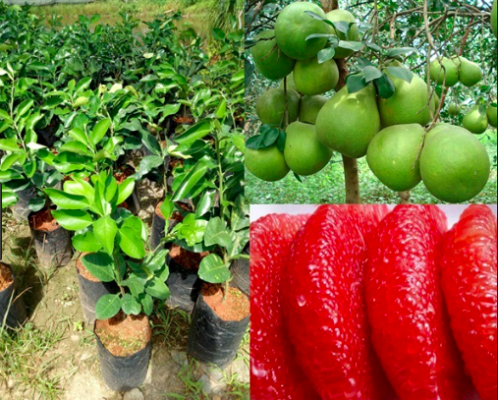
Due to its high productivity and value, the super-sweet pomelo is currently being widely propagated across Vietnam. There are generally two main propagation methods: grafting or air-layering. Alternatively, you can purchase pre-nursery-grown saplings from established plant nurseries.
Selecting Soil: Although adaptable to various living conditions, like other pomelos, it thrives and yields best in high-moisture, nutrient-rich soils. It is intolerant to waterlogging, so a proper drainage system is essential, especially during rainy days. An ideal soil pH is around 6.
Preparing Saplings: Select large, healthy saplings free of diseases, with an adequate root system and a good canopy. Before planting, prune away excess leaves, branches, and roots to help the plant absorb maximum nutrition and recover quickly.
Digging Pits and Beds: Dig planting pits in advance and apply basal fertilizer using animal manure or NPK to enrich the soil. Match pit dimensions to the root ball size—standard dimensions are $60 \times 60 \times 60\text{ cm}$. Space individual trees 4 to 5 meters apart to allow proper canopy development, sufficient ventilation, and disease prevention.
Planting the Sapling: Gently place the sapling into the prepared pit, taking care not to break the soil ball or damage/crush the roots, which would hinder growth. Backfill the pit and pack the soil firmly around the base. Use bamboo or wooden stakes to keep the sapling upright, and thoroughly water the base immediately to establish moisture.
During the early planting stage, water frequently to maintain soil moisture and help the sapling sprout and establish roots. During dry spells and the flowering period, ensure adequate watering to facilitate fruit set. In the rainy season, reduce watering frequency or withhold water entirely, focusing instead on prompt drainage to prevent root rot from waterlogging.
Regularly prune branches and shape the canopy as the tree grows. This prevents excessive height, concentrates the tree's nutrients for high yields, and prevents pest outbreaks.
Perform periodic weeding and earth up the base every 3 months to maintain orchard ventilation and eliminate bacterial pathogen reservoirs.
During the early years of growth, dilute fertilizers in water and apply them directly for rapid nutrient absorption. In subsequent years, simply dig a trench around the drip line and apply fertilizer into the trench. Fertilize systematically 3 to 4 times a year. After harvesting, apply a supplemental round of organic manure to replenish nutrients for the next crop.
Symptoms: Leaves develop small brownish speckles that eventually expand into large patches, spreading to fruits and branches. This disease spreads rapidly during the rainy season.
Prevention & Treatment: Ensure adequate water and nutrient supply to boost plant immunity. Utilize specialized plant protection products, and promptly prune and destroy infected branches or trees to prevent spreading.
Symptoms: Caused by the fungus Phytophthora nicotianae. Water-soaked lesions with yellow gum appear on the trunk base, gradually turning brown and hardening. Over time, leaves drop, branches wither, and the tree dies shortly thereafter.
Prevention & Treatment: Regularly clean the area around the tree base to maintain proper ventilation. For infected trees, scrape off the diseased bark and apply Alpine 80WDG solution mixed with a little water directly to the scraped area.
With these insights into the super-sweet pomelo, we hope you gain useful information, particularly regarding the cultivation and care of this variety.
 Zalo
Zalo